The tradition of firing the cannon annually at the end of the Spring term to mark the graduation of UNB students can be traced back to 1837. At that time, Fredericton was a British garrison, and a daily evening gun signaled the end of the day.
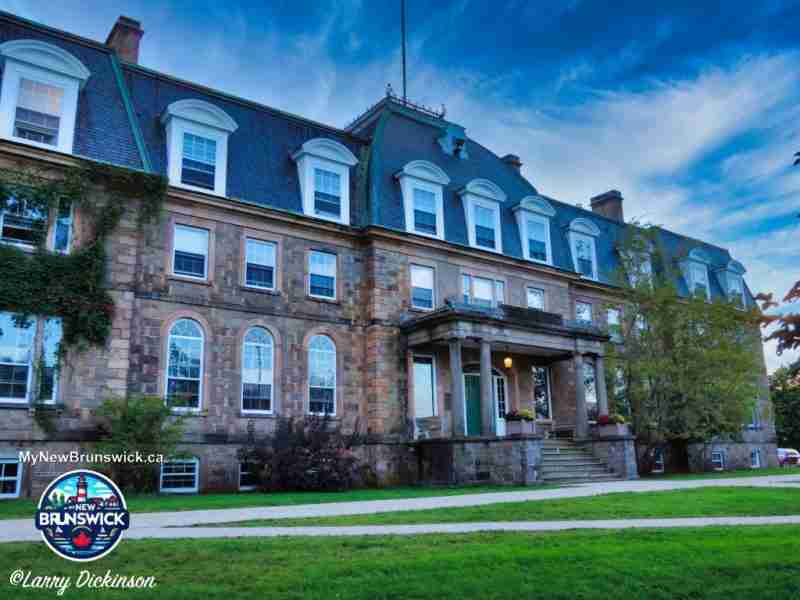
In 1837, when Lady Harvey (wife of New Brunswick Lieutenant Governor Sir John Harvey) attended Encaenia, students used the sound of the daily evening gun as a cue to illuminate the Old Arts Building, making it visible to the town.
When the university received a cannon, it was hidden for fear that students would try to fire it. However, on Encaenia night, students managed to fill the cannon with gunpowder and fire it, causing panic among Fredericton residents.
In the 1870s, firing the cannon to celebrate Encaenia became an unofficial and controversial ceremony. The class of 1876 is often credited with formalizing the practice when they stole a gun, brought it back to the university, and fired it in front of the Old Arts Building at night.
For years, the university administration banned firing the cannon and tried to locate and disable it. However, students managed to outwit their efforts, and by 1883, the faculty appeared to have accepted the tradition. Cannons used were often stolen and had to be replaced frequently.
The tradition was suspended in 1924 after a student was seriously injured, but resumed in 1926. The last recorded cannon firing was in 1936. An attempt in 1941 failed due to national defense regulations prohibiting the purchase of explosives without a permit. By 1942, the tradition was officially discontinued due to factors such as larger classes, reduced tolerance for pranks, and a scarcity of available cannons.
Each cannon used was known as the “rusty rebel.” A cannon was discovered in the 1950s near the Lady Beaverbrook Gym and reburied the next year when Buchanan Field was built (now the location of the Currie Center). Carleton Hall was later constructed on a site that used to be a popular hiding place for the cannon.
This post has already been read 1069 times!