

Benjamin Tibbets, the son of Andrew Tibbets, was born in Queens County in 1813. His mother was a McFarlane. The Tibbets family moved from the Millcove-Cambridge area to Scotchtown (Grand Lake) after their home was destroyed by fire. Eight years later, in 1830, the Tibbets moved to Fredericton.
Benjamin Tibbets received a basic education in Fredericton, but his real talents lay in drafting and engineering. He worked with Benjamin Wolhaupter, a watchmaker, in Fredericton, and then with Mr. Robertson, also a watchmaker, in Woodstock. He later apprenticed in several foundries. For two years he worked in Tibbets Machine Shop in Montréal.
After being a watchmaker’s apprenticeship and a foundry manager, he eventually began studying the design and construction of steam engines. Tibbets devised and built a new type of engine, a “steam-saving apparatus,” in Fredericton, which combined the principle of low-pressure steam working in conjunction with high pressure steam to improve the performance and speed of riverboats. Tibbets’ invention was first used in the steamer “Reindeer”, which was built at Nashwaaksis by Thomas Pickard and finished at Fredericton. It was patented in Lower Canada in November 1845.
In the latter part of 1847, Benjamin Tibbets made the decision to relocate to Quebec, believing it offered a more promising market for his groundbreaking invention – the compound steam engine. This creation had been tested with remarkable success on the Reindeer on the St. John River. He became a stakeholder in a foundry run by a family member at Point Levis. Over the following years, he constructed several engines. One was integrated into a hull he had designed, pleasing the owners so much they christened the resultant steamer B.F.Tibbets. Another engine was fitted into the Novelty, a Quebec-Levis ferry celebrated for her rapid speed at that time. Tibbets spent the winter of 1851-52 actively involved in creating engines for three steamers being assembled in Quebec.
However, in early 1852, Tibbets’ machine workshop was tragically consumed by fire. Some of the patterns were rescued, but they too were later destroyed in another blaze. This dealt a considerable blow to Tibbets, who had passionately desired to own his foundry but was now on the verge of financial collapse. He stayed in Quebec until June 1853, by which time his health was severely compromised by tuberculosis. Hoping for recovery, he went back to New Brunswick to stay with his uncle, Henry MacFarlane, in Scotchtown. Unfortunately, there was no relief for his illness, and he passed away on November 19, aged just thirty-five.
A poignant tale surrounds Tibbets’ passing, repeatedly shared over the decades. The crux of the story is that on the very night of the inventor’s death, the B. F. Tibbets, a steamer he had built during his tenure in Quebec, went up in flames a few miles from his location. Despite the captivating narrative, this account holds no truth. Records clearly state that the B. F. Tibbets first appeared on the St. John in 1855, nearly two years post the inventor’s demise. While it’s true the steamer eventually burned, this didn’t occur until June 5, 1856. Here’s the accurate narrative:
On June 1 of that year, the B. F. Tibbets was tasked with towing a lumber raft to Saint John from Grand Lake. The journey had barely commenced when a fire broke out in the engine room. A strong wind fueled the flames, and Captain Crothers had just enough time to steer the doomed vessel towards Flowers Cove before being forced to abandon the wheelhouse. Two crew members, their only escape route being a raft boat, barely managed to disengage the towline before being compelled to leap into the boat by the encroaching flames. The raft boat was held fast by the towline, and the crew members had to hang onto the side until the towline eventually gave way to the fire, allowing them to break free.
Simultaneously, the rest of the crew had assembled on the bow deck of the burning ship, making desperate attempts to position another raft boat that was being towed alongside, ahead of the paddle wheel. With the paddle wheels still spinning, the boat was in imminent danger of being crushed, risking injury or even death to its occupants. At this point, Captain Crothers instructed everyone except the mate to board the boat. He and the mate used pike poles to hold the boat off, managing to keep it clear of the advancing great paddle. Seeing the boat was clear, both men took the plunge and swam with all their might to avoid being struck by the paddle wheel. They managed to reach the already overcrowded raft boat and clung onto it as it headed for the safety of the shore. This dramatic incident marked the tragic end of the steamer named in honour of Benjamin Tibbets.

Meanwhile…
Jonathan Hornblower (1717–1780) was an accomplished engineer from a family known for its inventive talents. His father, Joseph Hornblower (1692?–1761), was born in Broseley, Shropshire. Joseph met Thomas Newcomen in 1712 while Newcomen was building an early steam engine in Wolverhampton. In 1725, Joseph moved to Cornwall to install a Newcomen engine at Wheal Rose near Truro. He later built similar engines at Wheal Bury and Polgooth before settling in Salem, Chacewater, in 1748. Joseph remained there until his death in Bristol in 1761.
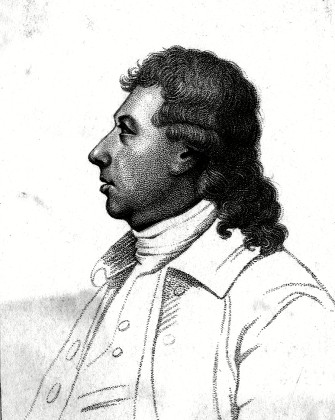
Jonathan succeeded his father as an engineer in Cornwall in 1745 and permanently settled in Chacewater by 1765. He was heavily involved in building steam engines and began assembling the Tresavean engine on January 20, 1766. Jonathan died at Whitehall, near Scorrier, Cornwall, in 1780, leaving behind six sons.
Jonathan’s brother, Josiah Hornblower (1729?–1809), also worked with him in Cornwall before emigrating to America in May 1753. In the United States, Josiah gained a strong reputation as both an engineer and a mathematician. He served as a magistrate and became a member of the New Jersey legislature, eventually rising to Speaker of the House of Assembly. Josiah died in Belleville, New Jersey, in January 1809.
Jonathan’s four eldest sons followed him into engineering.
-
Jabez Carter Hornblower (1744–1814), the eldest, was born in Broseley on May 21, 1744. Initially trained in law by his grandfather, Carter, Jabez turned to engineering at age nineteen, working alongside his father. In 1775, he traveled to Holland to construct engines for the Dutch government and later worked in Sweden. By 1788, he was running a business in Gloucester, which ended in bankruptcy. Jabez patented an improved calico-glazing machine on February 4, 1800, and contributed writings on steam engines to Pantologia (1813). He died in London on July 11, 1814.
-
Jethro Hornblower (1746–1820), Jonathan’s third son, patented a “new method of making pattens” on November 15, 1798.
The most prominent of Jonathan’s sons was Jonathan Carter Hornblower (1753–1815), born at Chacewater on July 5, 1753. He is credited with inventing the double-beat valve and became a major figure in the early development of steam engines. When James Watt introduced his engine with a separate condenser, Jonathan Carter and his father became key competitors. Although Watt initially hired Jonathan Carter and his brothers to assist in building engines, the Hornblowers soon attempted to create their own design to surpass Watt’s invention.
On July 13, 1781, Jonathan Carter patented a machine described as “a machine or engine for raising water and other liquids and for other purposes by means of fire and steam.” This design featured two cylinders, both connected to the same working beam. However, Watt claimed it infringed on his patent, particularly regarding the use of a separate condenser. After a lengthy legal battle, the Court of King’s Bench ruled against Hornblower in 1799, finding the design essentially based on Watt’s expansion principle. Despite this, Hornblower’s machine was historically significant as the first attempt to use steam expansively, laying the groundwork for the later compound engine developed by Woolf.
Jonathan Carter Hornblower continued to innovate, patenting additional designs, including:
-
A rotative engine in 1798,
-
A steam wheel in 1805,
-
And a motion-communicating machine published in Bristol in 1786.
He also contributed numerous essays to Nicholson’s Journal, covering topics such as hydraulic bellows (1802), measuring screws (1803), chimney-sweeping machines (1804), and methods of measuring mechanical power (1805). Through his work, he earned considerable wealth and recognition.
Jonathan Carter Hornblower died in Penryn in March 1815, leaving behind two daughters. His contributions, though overshadowed by Watt’s dominance, remain crucial to the history of steam engineering.
This post has already been read 3509 times!


Clarifying the spelling of his name appears to be quite difficult. Benjamin invented and built a type of compound engine and was the first to use any compound engine on the River, but the original compound engine had been invented in 1781 by Jonathan Hornblower.