

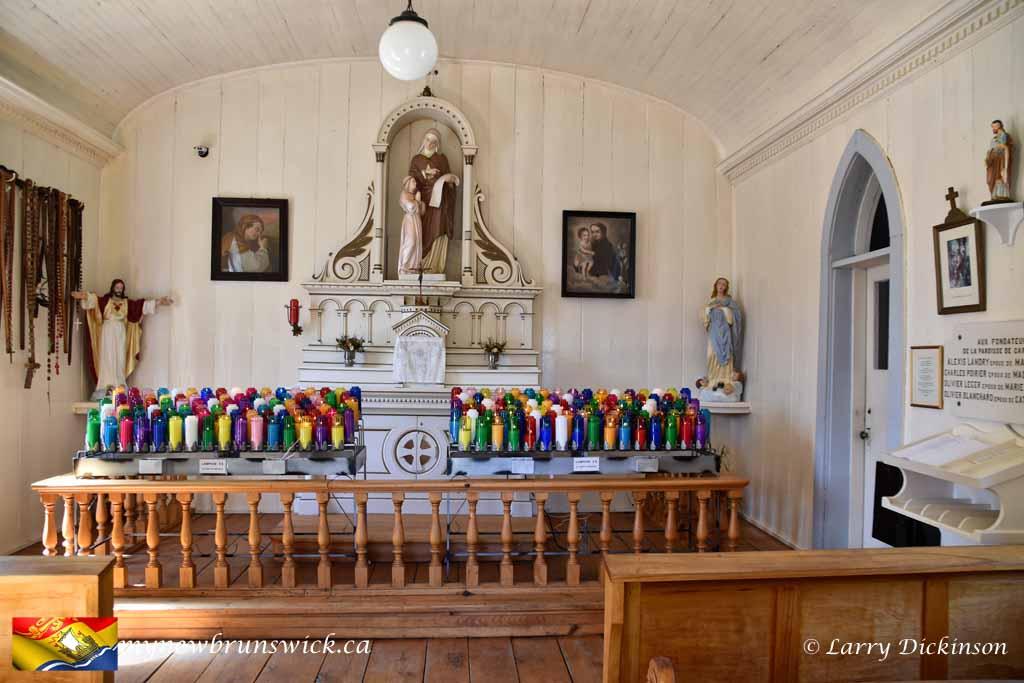
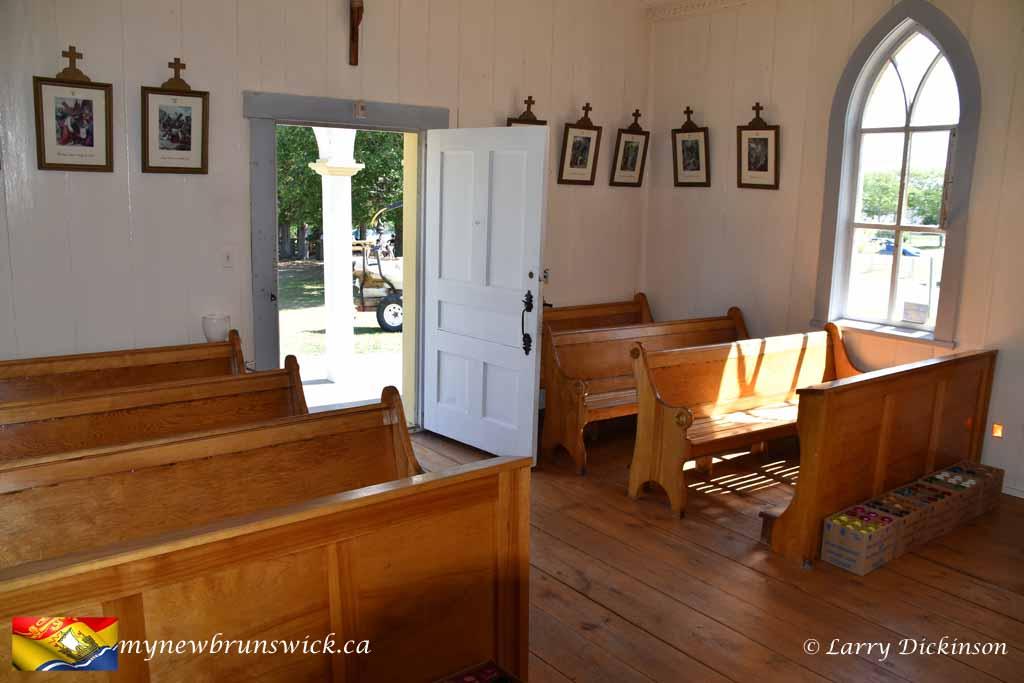
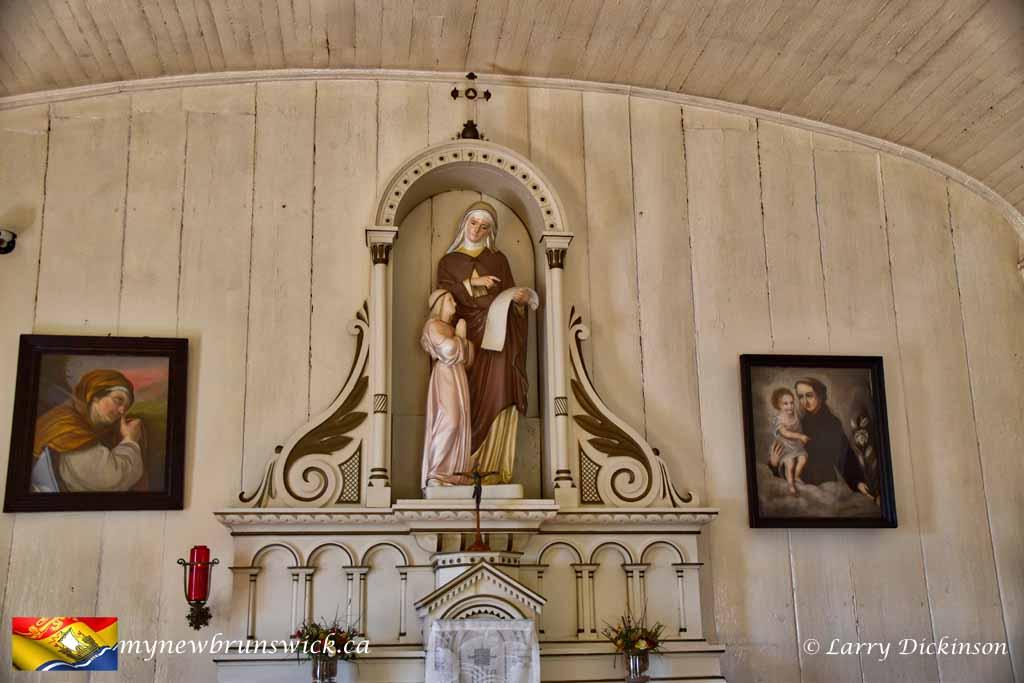
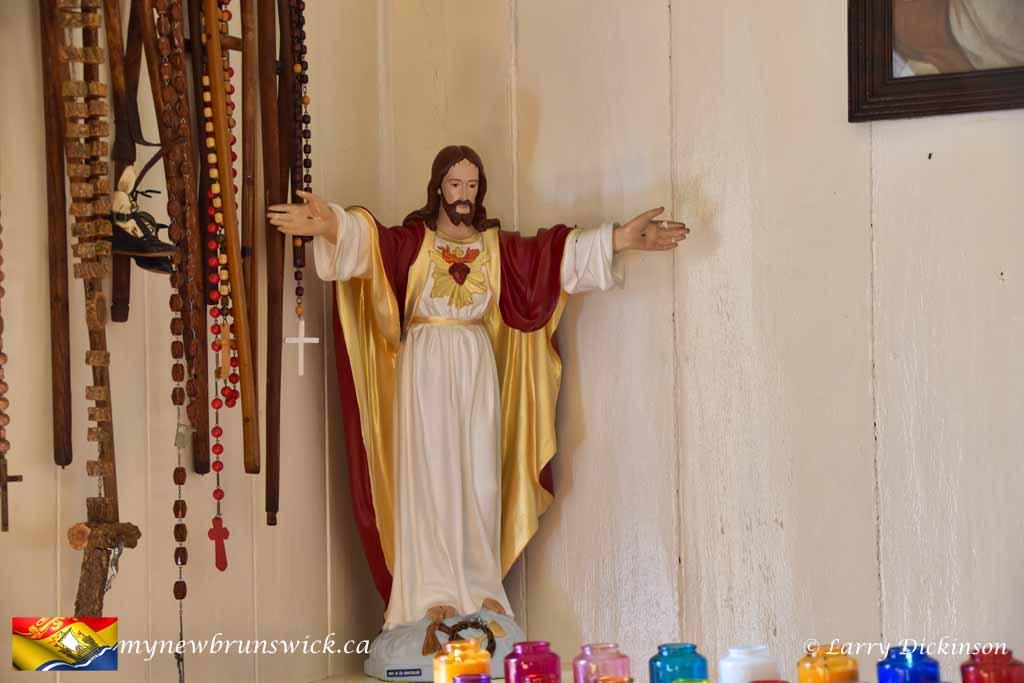
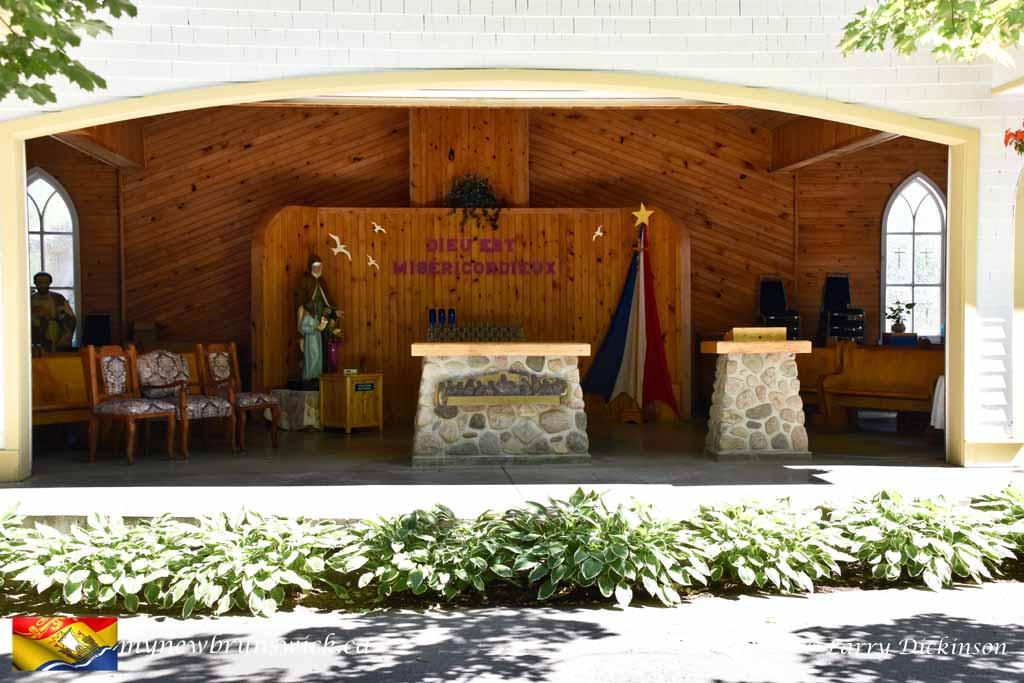
Established on land donated by Alexis Landry in 1791, the Sainte-Anne-du-Bocage Sanctuary features a collection of religious and historical sites including a chapel, a Way of the Cross, a well, a fountain, a cemetery, and various monuments, all set within enclosed farmland. The chapel is one of the oldest Acadian places of worship and remains shrouded in mystery, as the exact motive behind its construction is unclear, though it is believed to be connected to a historic dispute between the eastern and western residents of the city. A popular pilgrimage site in the latter half of the 19th century, the sanctuary continues to draw both local residents and tourists.

Sainte-Anne-du-Bocage Sanctuary is situated in the western section of Caraquet, accessible via Saint-Pierre-Ouest Boulevard. It rests on a plateau about seven meters above the Bay of Caraquet and shares its name with the neighbourhood where it is located.
Alexis Landry, a merchant and survivor of the Acadian Deportation, likely settled in Caraquet around 1757 with three other families. After narrowly escaping a second deportation during Roderick MacKenzie’s raid in 1761, Landry and his family temporarily abandoned their land to ensure their safety. They returned in 1768, and by March 13, 1769, Magistrate George Walker officially sanctioned their settlement on their previous site from 1761, contingent on its vacancy. Landry was granted formal ownership in 1784.
By this time, a log church dedicated to Saint Anne, which had been initiated by Landry in 1757, possibly existed as early as 1772 or 1771. Landry, who had installed a statue of Saint Anne upon his arrival, conducted white masses—services held without a priest—during periods without missionary presence.
In 1766, ten years after the deportation, the Bishop of Quebec pledged to send a missionary to serve the Acadian communities in the Maritimes. Due to its strategic location and significant population, Caraquet was frequently visited by missionaries, starting with Charles-François Bailly of Messein (1768-1773), followed by Mathurin Bourg (1773-1785), and then Antoine Girouard (1785-1787), who became the first resident missionary in Caraquet in 1787. Despite attempts to relocate and renovate the church, it remained near its original site.
In 1791, Landry initiated the construction of a new church near the cemetery, which had been planned for a central location years earlier. On July 10, 1793, he donated part of his estate for the church’s construction, stipulating that his family retain the use of a private bench and that his funeral costs be covered by the parish. Olivier Blanchard was awarded the construction contract. The church, made of roundwood in a style common among Acadians from 1755 to the early 19th century, was consecrated in July 1794 by Father Bourg.
A fire on August 28, 1795, threatened the sanctuary but spared the church when the wind shifted direction, an event Landry attributed to divine intervention.

The church of Sainte-Anne-du-Bocage Sanctuary, positioned too remotely for the eastern city residents, was abandoned around 1818. Following numerous efforts, a new church was constructed in 1818 in the Pointe-Rockuse area, close to the current location of the Saint-Pierre-aux-Liens Church, offering a more central setting for the community.

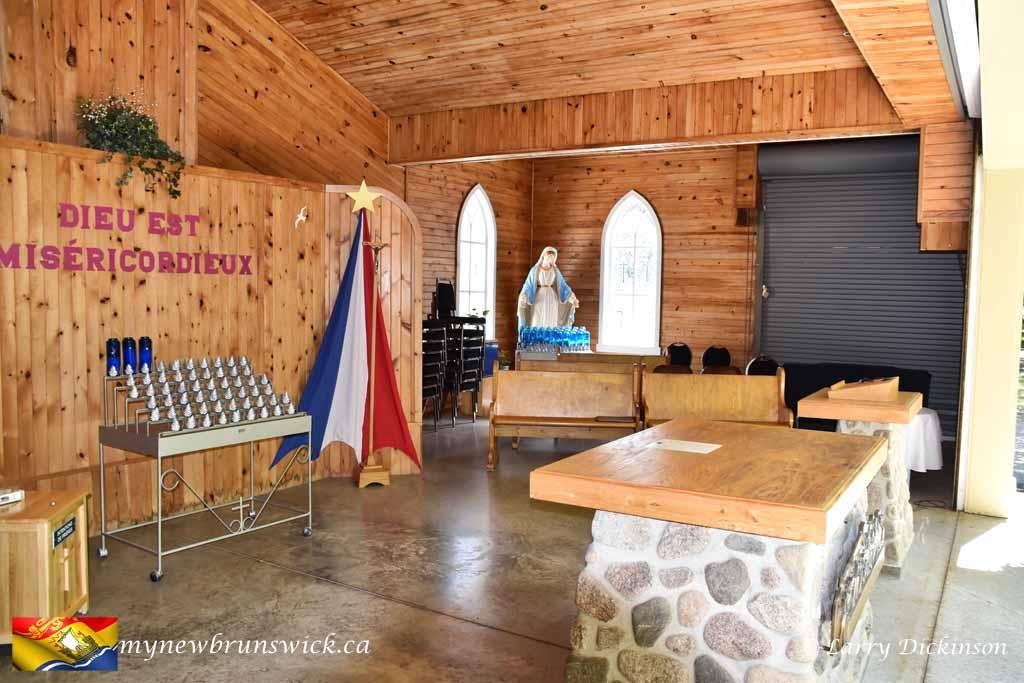
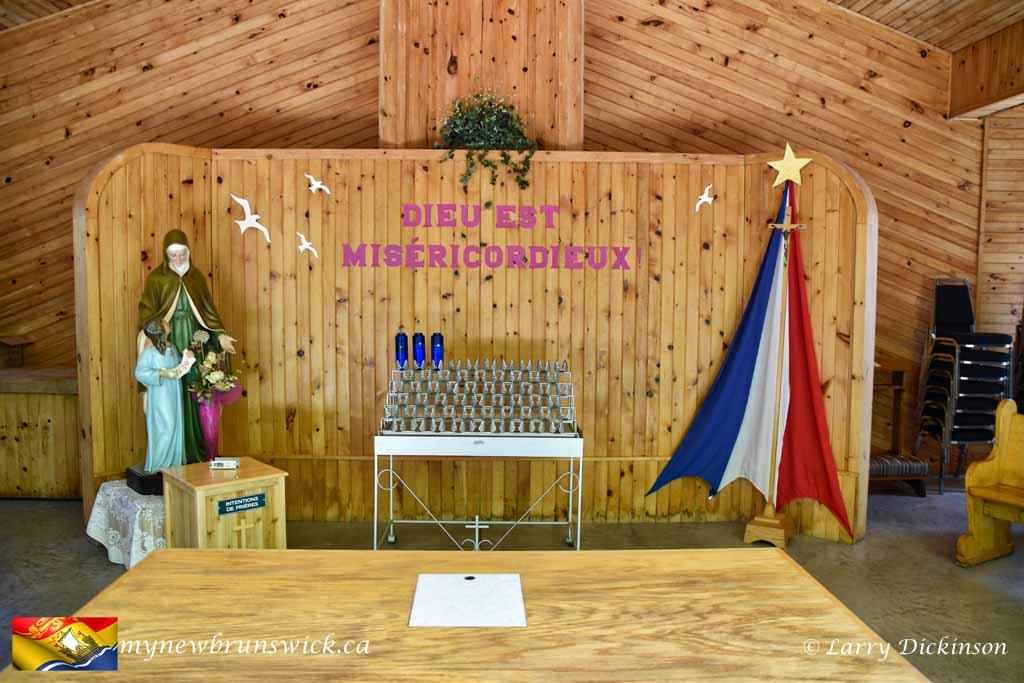
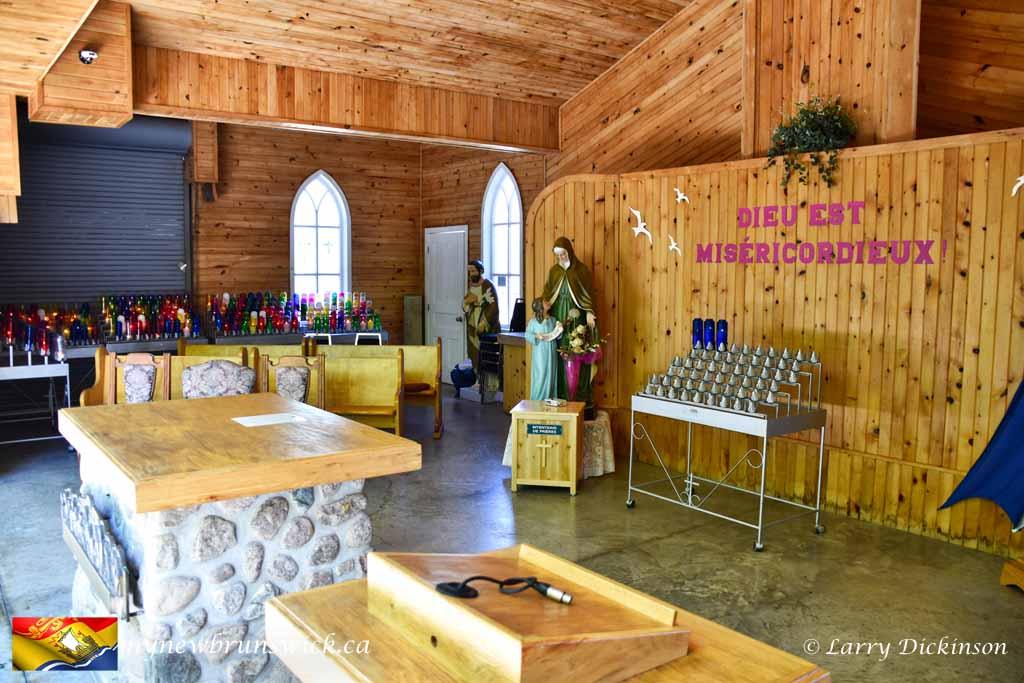
The chapel visible today in the Bocage was constructed over a period of debate concerning its exact timing. Rosemonde Landry suggests its construction occurred between 1829 and 1844, while a letter unearthed by Fidèle Thériault pins its creation to 1836 or later. Other sources propose a timeframe between 1832 and 1836. Noted for its distinctive architecture, the chapel was not regularly used for Mass. There are three prevailing theories about its construction: it may have been built as a tribute to the survivors of the Deportation, as an initiative by local parishioners to advocate for a church in their area, or by sailors grateful for surviving a shipwreck.
Construction of a stone church measuring 48 feet by 120 feet commenced in 1837 but was halted in 1853 due to financial constraints and a decision by the bishop. The Saint-Pierre-aux-Liens Church was eventually constructed in central Caraquet between 1857 and 1860.
Historical records initially suggested the first pilgrimage at Sainte-Anne was in 1914, related to a shipwreck. However, research by Rosemonde Cormier indicates the first pilgrimage actually occurred on July 26, 1857, following a tragic shipwreck on July 22 that resulted in 56 deaths. The first major pilgrimage was recorded in 1880, with the event first mentioned in the press that year, but detailed accounts only appeared in 1886.
The Caraquet & Gulf Shore Railway, established near the sanctuary in 1887, facilitated access to Sainte-Anne-du-Bocage even before its completion in November of that year, offering half-price tickets to pilgrims from regions as distant as Bathurst. The chapel underwent renovations in 1904, with Gothic windows added shortly thereafter.

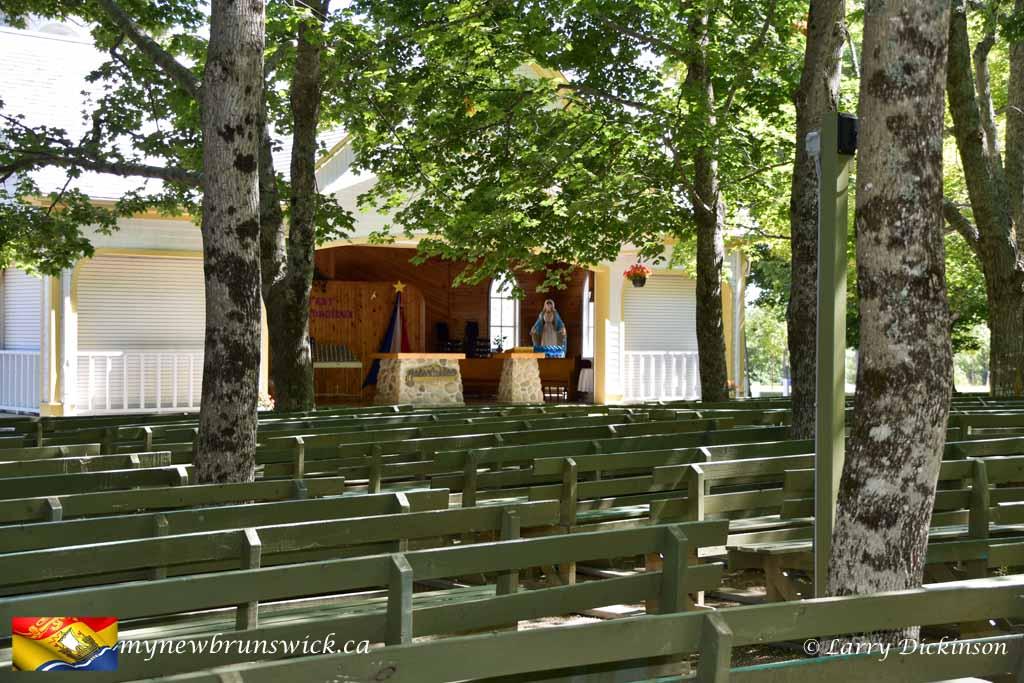
In 1909, an extension was added to the rear of the chapel, enabling outdoor Mass celebrations. On June 4, 1914, the four sailors of the schooner Mary Jane visited Sainte-Anne-du-Bocage for a pilgrimage immediately upon docking, to express gratitude to the saint for their protection during a storm. That same year, a staircase leading to what is known as the miraculous spring and a grotto containing a statue were constructed and consecrated.
The pilgrimage, initially managed by the local parish, came under the administration of the Redemptorists from Sainte-Anne-de-Beaupré, Quebec, in 1920. A museum was established within the sanctuary in 1940, featuring letters, geographical maps, chapel relics, and other items, some of which belonged to Alexis Landry. In 1947, Martin Lavigne from Bathurst reported a miraculous cure from a disability at the pilgrimage, drawing an unprecedented crowd of around 20,000 people the next year. The ritual of blessing the sick was introduced in 1949.
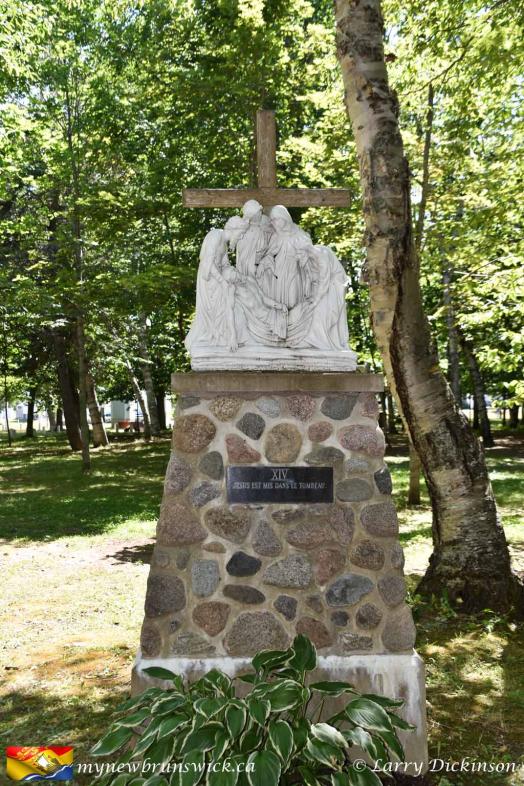
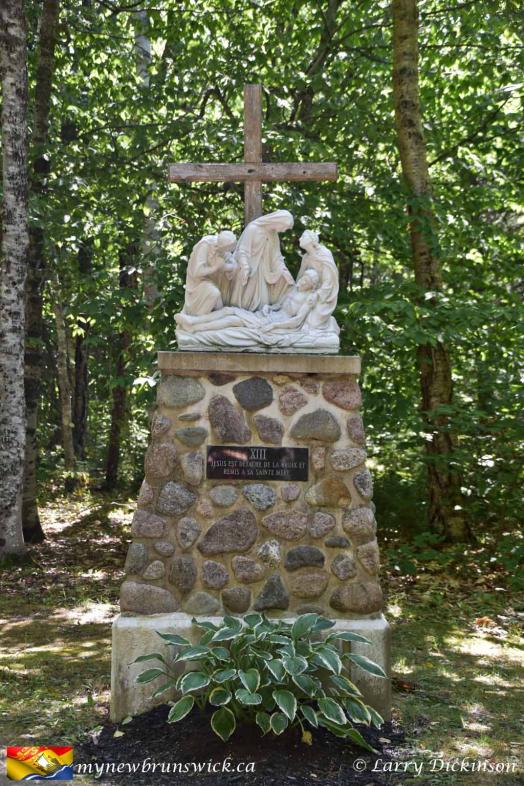
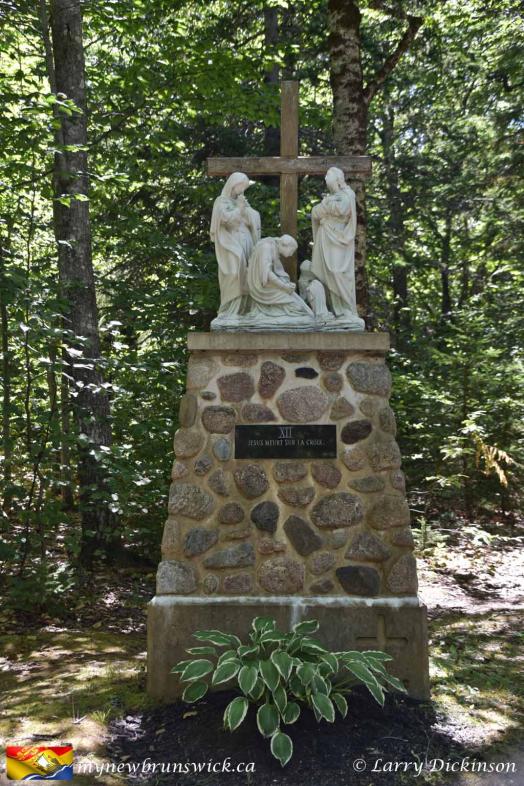
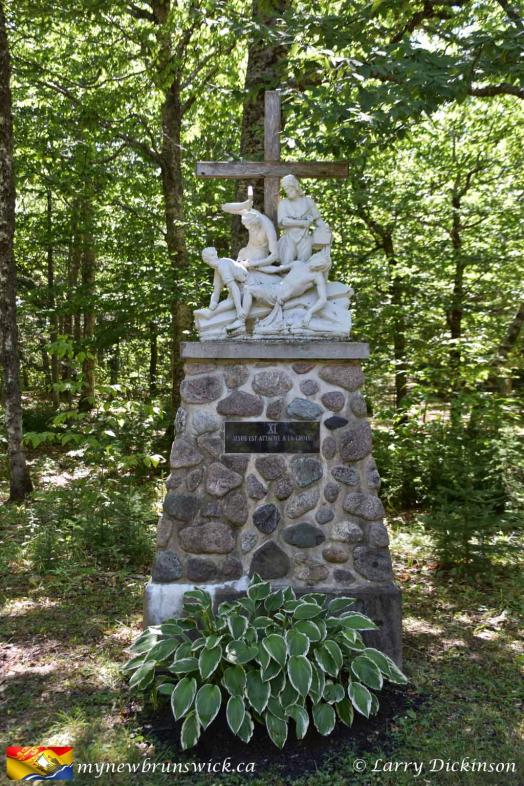
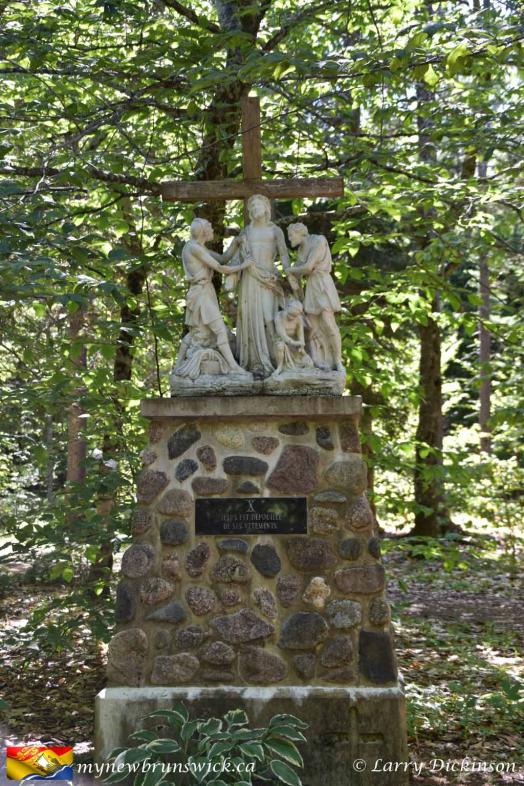
By 1951, the Capuchins from Bathurst and Listuguj, Quebec, assumed responsibility for organizing the pilgrimage. Construction of a Way of the Cross within the grove’s hedgerow commenced that year. Additionally, the novena to Sainte-Anne began broadcasting from Listuguj, catering to those unable to attend the pilgrimage. This partnership helped elevate the prominence of the Sainte-Anne devotion in Acadie, distancing it from previous marginalization due to its association with the Micmac community.

During the 1950s, devotion to Our Lady of the Assumption, the patron saint of Acadia, surged in importance; a statue in her likeness was unveiled in 1952. Denise Lamontagne notes that this bolstered the cult of Sainte-Anne in the Bocage, positioning it as a complementary site to that of Mary. The construction of the Way of the Cross concluded in 1954, the Marian year, with the installation of the fifteen mysteries of the rosary. In 1955, a portal commemorating the 200th anniversary of the Acadian Deportation was constructed. A stone and bronze monument featuring Alexis Landry was inaugurated in 1956, marking the 75th anniversary of the first Acadian National Convention in Memramcook in 1881. Novenas often spotlight historical figures like Alexis Landry and Marcel-François Richard, framing the Bocage as a site for celebrating Acadian nationalism.
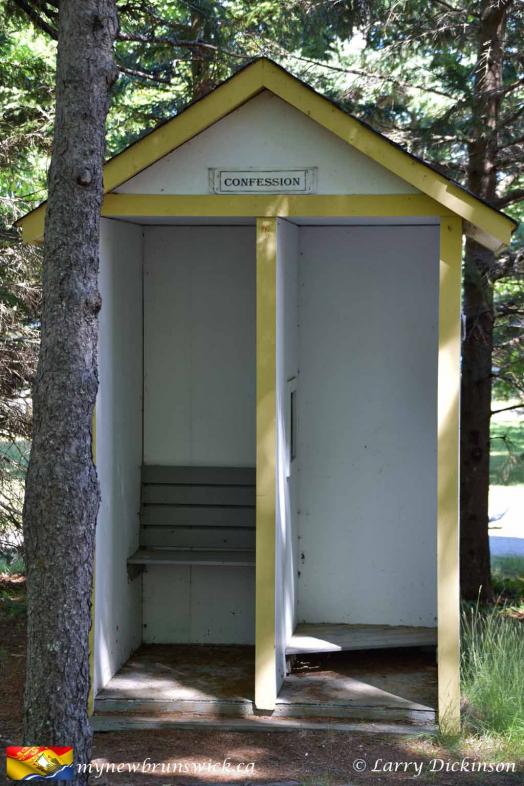
The monument to Alexis Landry was replaced in 1961 by a new stone monument unveiled by French writer Henri Queffélec. During the 1970s, a replica of the chapel, as it appeared before 20th-century renovations, was constructed at the Acadian Historical Village near Caraquet, which portrays Acadian life from 1770 to 1939 with forty buildings and costumed interpreters. In 1975, public toilets were added to the site, and the chapel’s interior was restored. In 1984, a tragic incident occurred when four pilgrims en route to the Bocage died near Paquetville. Erosion protection measures were added along the park’s banks in 1996. The chapel underwent further renovations and expansions in 1999 and was designated a municipal historic site on November 1, 2006. On July 26, 2004, during the 400th anniversary of Acadia, Cardinal Marc Ouellet led a Mass attended by over 10,000 people. A monument commemorating the Great Upheaval was unveiled on July 28, 2007, and the spring was reconstructed in 2011 following storm damage.

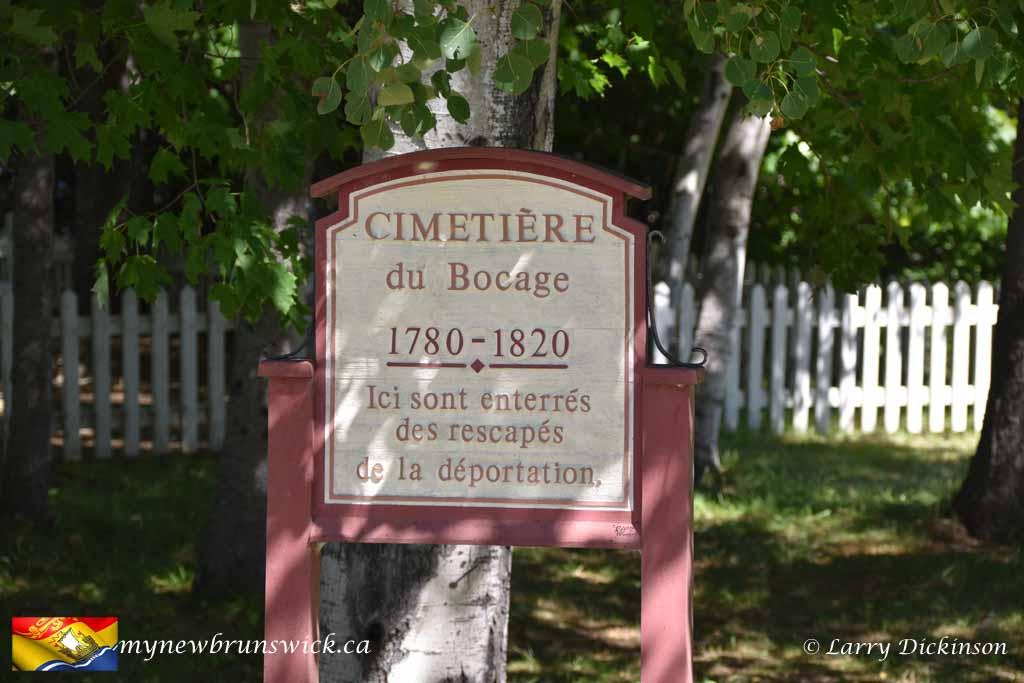
Over 260 people are believed to be buried in the cemetery, though only a few tombstones remain. Many of these markers belong to the city’s founders, such as Alexis Landry and Louis Lanteigne, making it a significant historical site. This cemetery is particularly notable as one of the few known burial sites for survivors of the Deportation of the Acadians.
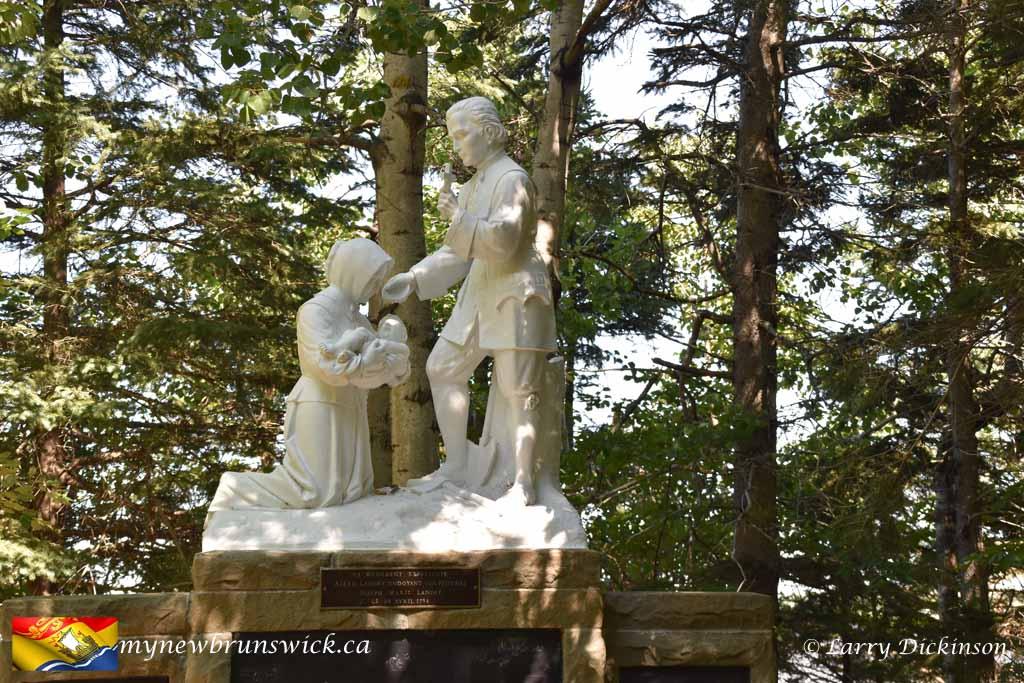
A monument at Alexis Landry’s tomb features a depiction of him greeting his grandson Joseph-Marie in 1794. The monument’s pedestal is adorned with three panels: the left panel depicts the Deportation of the Acadians, the center panel shows miraculous fishing, and the right panel commemorates the arrival of Caraquet’s founders. Additional monuments have been erected to honor the memory of other founders.

To the south of the chapel stands a monument from L’Odyssée acadienne. This series of monuments, initiated by the Société nationale de l’Acadie, marks various international locations significant to the Grand Dérangement. Each monument is set on a star-shaped base. The four sides feature inscriptions in both English and French; one details this chapter of Acadian history, while the other describes specific events related to the location of the monument. Atop the base, a map from Acadie: The Odyssey of a People is displayed. The monument also includes a replica of the Cross of the Deportation from Grand-Pré. Nearby, near the parking area, ruins can be found with a commemorative plaque.

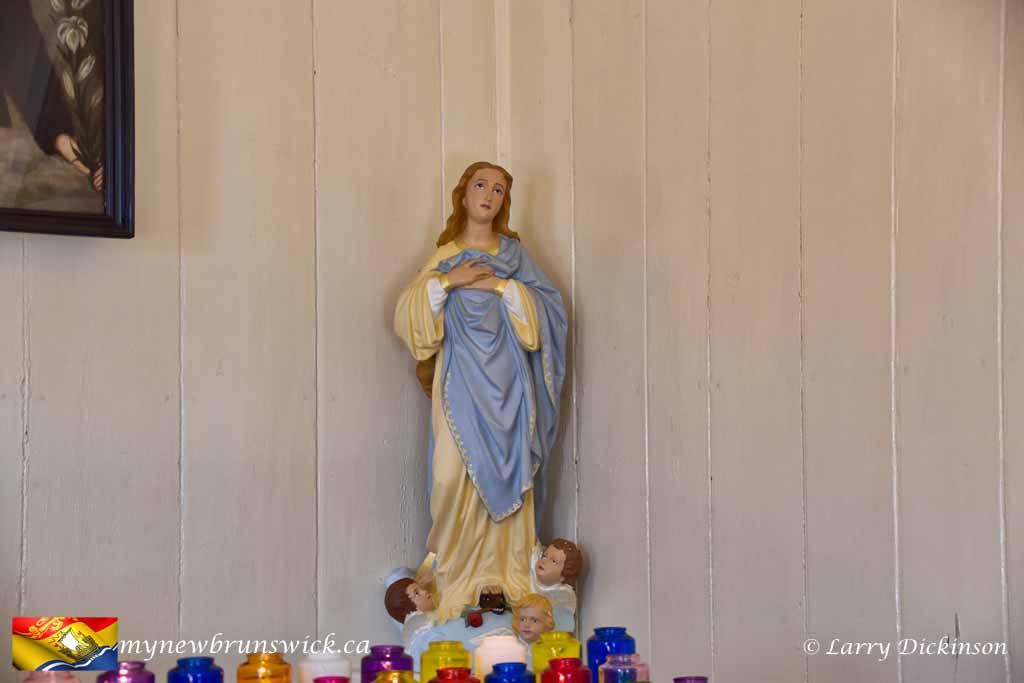
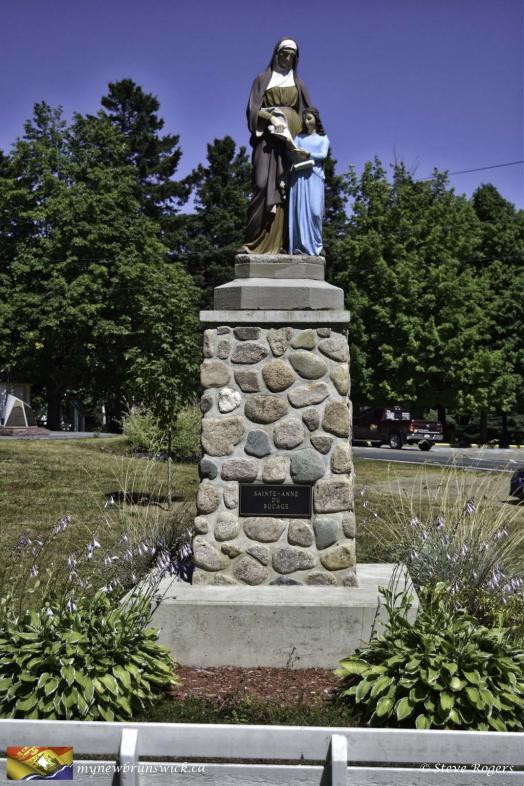
North of the chapel, a short path leads to a staircase which ascends to a terrace overlooking the Bay of Caraquet. Here, a fountain topped with a stone grotto houses statues of Saint Anne and the Virgin Mary. The water from this fountain is considered miraculous by some, attracting many to drink or even bottle it. Nearby, in the bay, a large string of buoys is visible. South of the chapel, there is also a well accompanied by a manual water pump.
The park hosts a variety of festivities throughout the summer. The season kicks off on June 15th with the daily prayer of the Lauds in the historical chapel. The novena to Sainte-Anne starts on July 17th. On the night of July 25th to 26th, a pilgrimage is undertaken from the Saint-Michel Archange church in Inkerman to Sainte-Anne-du-Bocage, covering a distance of over 25 kilometers. Several thousand people participate in the feast of Saint Anne, locally known as “Good Saint Anne,” held on July 26th, which marks the culmination of the novena. Many attendees, particularly the ill and disabled, hope for healing during this mass. Additionally, every August 15th, a Mass is celebrated on the National Day of Acadia and for Notre-Dame-de-l’Assomption, the patron saint of Acadia, at the sanctuary.
Click on a thumbnail to see more photos.
This post has already been read 13369 times!


how does one make a donation to Ste Anne du Bocage?
Go to the link in our post and there is a “Donate” button at the bottom.
Larry
My apologies for not following up on this.
Would someone please email me so that we can discuss the donation and another opportunity regarding Ste Anne du Bocage.
This is not a sales pitch or scam – I’m looking to do something in tribute to my father, a direct descendant of Alexis
Hi Lorraine,
I did a Google search for Sainte-Anne-du-Bocage Sanctuary and came up with this contact information:
CONTACT US
City Hall
Box 5695
10 Colosseum Street
Caraquet (NB) E1W 1B7
Email: ville@caraquet.ca
Telephone: 506 726-2727
Fax: 506 726-2660
Emergency (outside normal office hours)
506 726-2677
Larry
Webmaster